
Legacy & Biography — Abner Haynes
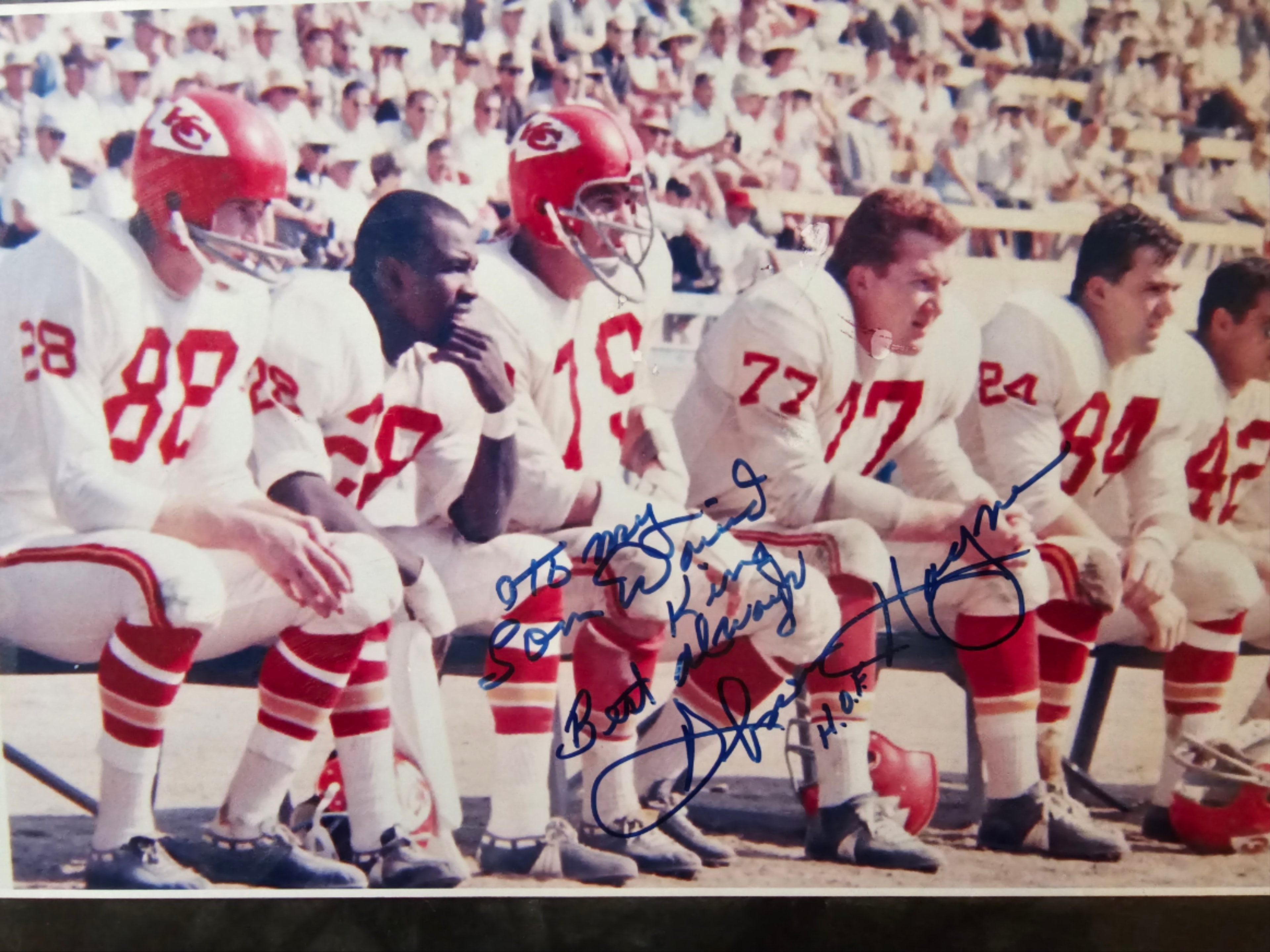
The Full Story
More Than a
Football Player
Abner Haynes was one of the greatest running backs of his generation — a five-time AFL All-Star, a championship MVP, and a player who electrified crowds from Dallas to Denver, Kansas City, Miami and New York But his most important run wasn't on a football field.
In 1956, at 17 years old, Abner walked onto the campus of North Texas State College and became the first Black player to integrate the Texas university system. He did it years before the Civil Rights Act. He did it in the face of threats, hostility, and institutional resistance. And he did it with grace, dignity, and an unshakeable belief that he belonged.
The Journey
A Life in Full
Born in Denton, Texas
Abner Haynes was born on September 19, 1938, in Denton, Texas — a city and state that would both celebrate and challenge him throughout his life.
Breaking the Color Barrier
At just 17 years old, Abner Haynes enrolled at North Texas State College (now the University of North Texas), becoming the first Black player to integrate the Texas university system. His courage in the face of hostility, threats, and institutional resistance changed the course of civil rights history in the state of Texas — years before the Civil Rights Act.
College Standout
Haynes became a star running back for the North Texas Mean Green, earning recognition as one of the most electrifying players in the region. His performance on the field proved, beyond any doubt, that talent knows no color.
AFL Draft & Dallas Texans
Selected by the Dallas Texans in the inaugural AFL Draft, Haynes immediately became the face of the franchise. In his rookie season he was named AFL Rookie of the Year and AFL Most Valuable Player — a historic double that no other player has matched.
AFL Championship
Haynes led the Dallas Texans to the 1962 AFL Championship, defeating the Houston Oilers in double overtime. He was named the game's MVP. It remains one of the most dramatic championship games in professional football history.
Five-Time AFL All-Star
Over his professional career, Haynes was selected to five AFL All-Star games. He rushed for over 4,600 yards, scored 56 touchdowns, and was one of the most feared offensive weapons in the league. He played for the Dallas Texans (later Kansas City Chiefs), Denver Broncos, Miami Dolphins, and New York Jets.
An American Hero
Abner Haynes' legacy extends far beyond football statistics. He was a man who walked into hostile territory — a Texas university, a segregated society — and refused to back down. His courage and character paved the way for generations of Black athletes and students in Texas. He is a civil rights pioneer, a champion, and an American hero.
The Bigger Picture
Before Rosa Parks Refused to Move,
Abner Haynes Stepped Forward
In 1956, the Civil Rights Act was still eight years away. Brown v. Board of Education had been decided just two years prior. Texas universities were still segregated — and the pressure to keep them that way was immense.
Abner Haynes didn't wait for the law to change. He enrolled. He played. He excelled. And in doing so, he forced an entire state to confront its own prejudice — one game, one practice, one classroom at a time.
His story is not just a football story. It is an American story — of courage, of perseverance, and of the belief that every person deserves the right to compete on a level field.
Explore More of His Story
Watch the documentary, browse the gallery, or get the book.